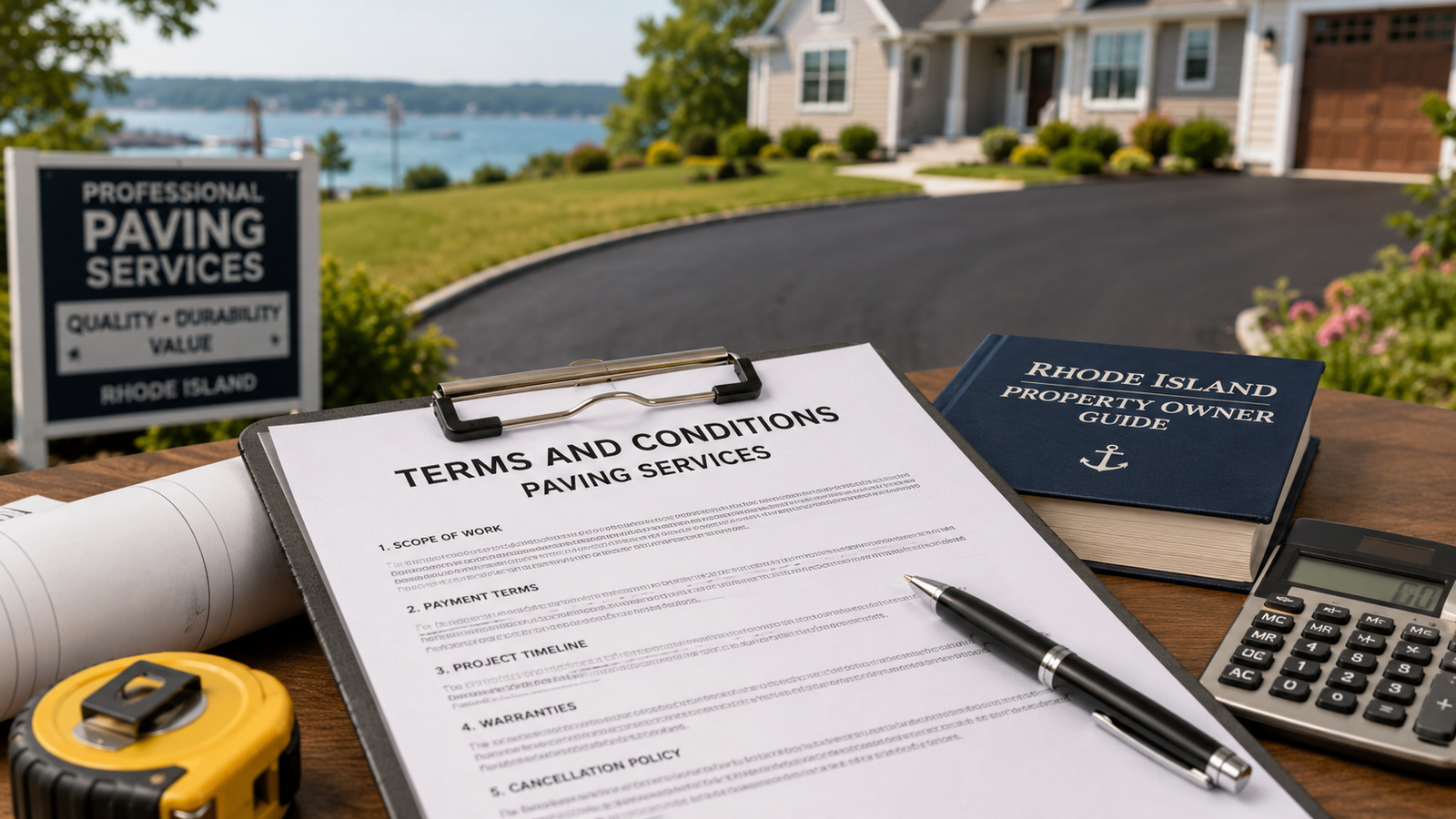
When a homeowner or business in Woonsocket, Warwick, or anywhere in Rhode Island hires a paving contractor, the agreement between the property owner and the contractor is governed by a set of terms and conditions that define each party’s rights, responsibilities, and expectations. Terms & Conditions Masterson Paving documents serve as the foundational framework for the contractor-client relationship establishing what work will be done, how disputes are handled, what warranties apply, and what protections are in place for both parties. Understanding what these agreements typically cover helps Rhode Island property owners engage paving contractors with confidence and informed expectations.
Why Terms and Conditions Matter in Paving Projects
Paving projects involve significant financial commitment a new residential driveway or commercial parking lot resurfacing is a meaningful investment that deserves the protection of a clear written agreement. Terms and conditions documents create that clarity by establishing the scope of work, payment terms, warranty provisions, dispute resolution processes, and other elements that could otherwise become sources of misunderstanding.
Rhode Island’s general contractor law and consumer protection regulations establish certain baseline requirements for home improvement contracts, but they do not eliminate the need for clear, specific agreement terms. A paving contract or terms and conditions document that goes beyond the minimum required by law addressing specific project details, material specifications, completion timelines, and warranty terms provides better protection for both the property owner and the contractor than a minimal or vague agreement.
Common Elements in Paving Service Terms and Conditions
Scope of work definition is the most fundamental element. The terms should specify exactly what work will be performed whether it is a full driveway replacement including excavation and subbase, an asphalt overlay of an existing surface, sealcoating only, crack repair, or some combination. The scope should also specify what is excluded for example, whether tree root removal, drainage improvements, or curb modifications are within the project scope or are separate.
Material specifications describe what materials will be used. For asphalt paving, this typically includes the type of asphalt mix (surface course, binder course), the depth of each layer, and any specific material requirements such as polymer-modified binder. For subbase work, it specifies the type and depth of gravel material. Clear material specifications allow property owners to understand what they are getting and provide a basis for verifying that work was performed as agreed.
Payment terms establish when and how payment is due. Paving projects often involve a deposit at contract execution, a progress payment when work is in progress, and a final payment upon completion and acceptance. Some contractors require full payment upon completion; others offer payment schedules. Terms should also address what happens in the event of late payment and whether interest or fees apply.
Timeline and scheduling provisions address when the work will be performed and what happens if delays occur. Paving is inherently weather-dependent rain, cold temperatures, and other conditions can delay paving work without notice. Terms typically address that paving is contingent on suitable weather conditions and that the contractor is not liable for weather-related delays. They may also address the order of the contractor’s project queue and how scheduling priority is managed.
Warranty provisions are particularly important for paving projects. A professional paving contractor typically provides a workmanship warranty for a defined period often one to three years covering defects in the installation work. This warranty typically does not cover damage caused by normal wear and tear, vehicle damage, root intrusion, damage from extreme weather events, or conditions caused by factors outside the contractor’s control. Understanding what the warranty covers and what it does not is important for property owners evaluating contractor proposals.
Limitation of liability clauses establish the maximum amount a contractor can be held responsible for in the event of a claim. These provisions are standard in construction contracts and serve to allocate risk between the parties in a way that reflects their relative ability to manage and insure against various types of loss.
Consumer Protection Considerations in Rhode Island
Rhode Island’s Home Services Consumer Protection Act establishes specific requirements for home improvement contractors, including paving contractors performing residential work. These requirements include contractor registration, specific contract content requirements for residential contracts exceeding $500, and certain consumer protections around cancellation rights and payment practices. Working with a registered Rhode Island contractor who provides a written contract meeting these requirements provides baseline consumer protection for Woonsocket and Warwick homeowners.
The Rhode Island Attorney General’s Consumer Protection Unit handles consumer complaints against home improvement contractors. Property owners who have disputes with paving contractors in Rhode Island can file complaints through this office. The existence of clear written terms and conditions signed by both parties and describing the agreed scope, materials, and warranties is the most important documentation in resolving any such dispute.
Frequently Asked Questions About Paving Service Terms and Conditions
Should a paving contractor provide a written contract? Yes. Rhode Island law requires written contracts for home improvement work exceeding $500. A written contract specifying the scope, materials, timeline, payment terms, and warranty is essential for both parties. Avoid contractors who resist providing written agreements.
What should I do if a paving contractor’s work does not meet the agreed terms? Document the issue with photographs and written description, then contact the contractor in writing describing the problem and requesting remedy. If the contractor does not respond appropriately, the Rhode Island Contractors’ Registration and Licensing Board and the Attorney General’s Consumer Protection Unit are available as recourse. Having clear written terms and conditions makes this process significantly more straightforward.
Do terms and conditions for a paving website apply to service agreements? Website terms and conditions govern the use of the website itself accessing information, submitting contact requests, and similar website interactions. Service agreements and project contracts are separate documents that govern the actual paving work. Both may be important in different contexts when working with a paving contractor.